
Introduction
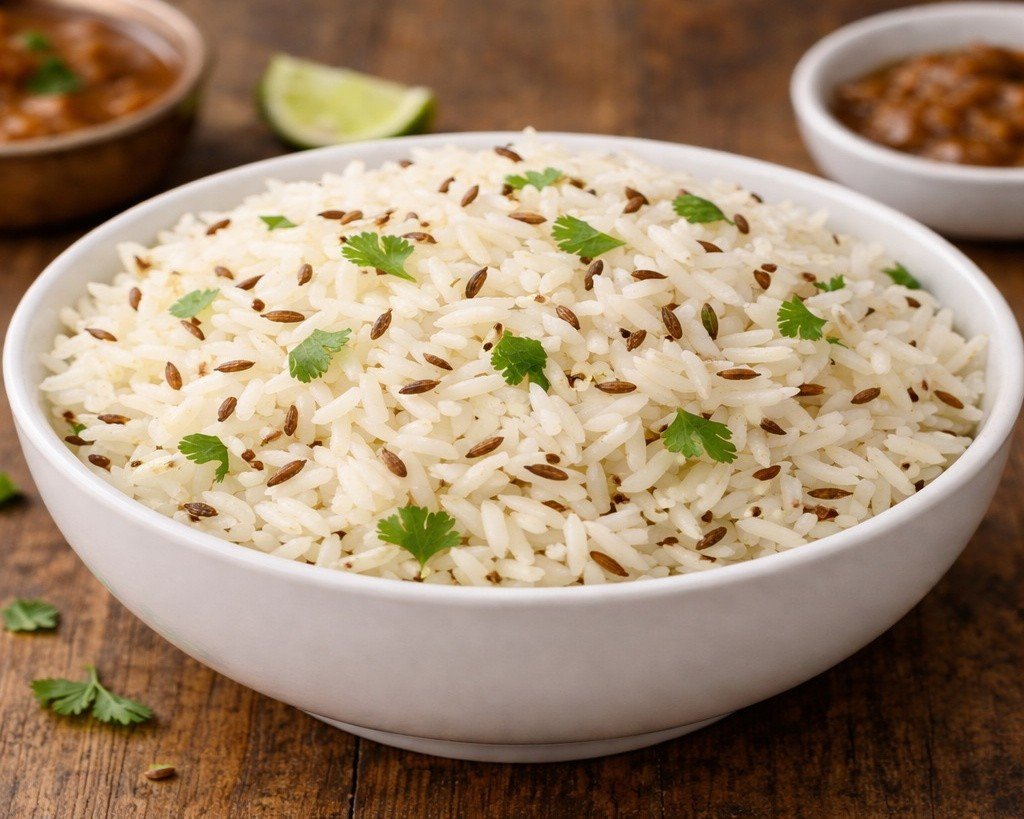
There is something deeply comforting about a plate of hot jeera rice served with simple dal, rajma, or paneer curry. In most Indian homes, jeera rice is that go-to dish when plain rice feels too boring but pulao feels like too much effort. Light, aromatic, and gently flavoured, jeera rice sits beautifully between everyday food and special meals.
This jeera rice recipe is the kind you often enjoy at a good dhaba or restaurant — long, fluffy grains, subtle aroma of jeera, and that unmistakable ghee tadka which makes the whole kitchen smell heavenly. The best part? You don’t need fancy ingredients or complicated steps. With the right method and a few small tips, you can make restaurant-style jeera rice at home every single time.
Whether you are a beginner, a busy working professional, or someone cooking a quick weekend meal, this jeera rice recipe will never fail you.
Table of Contents
Calories & Nutritional Information (Per Serving)
- Calories: 230–250 kcal
- Protein: 4.5 g
- Carbohydrates: 45 g
- Fat: 4 g
- Fiber: 1.2 g
(Values are approximate and depend on ghee/oil quantity)
Health Benefits
Jeera rice may look simple, but it has its own gentle health benefits when prepared mindfully.
- Jeera (Cumin): Aids digestion, reduces bloating, and adds natural aroma without heaviness
- Basmati Rice: Easier to digest compared to regular rice and lower on the glycaemic index
- Ghee (in moderation): Improves flavour and satiety, making meals more satisfying
- Light & Non-Greasy: Suitable for daily meals and light dinners
This dish is ideal for Indian dietary preferences where balance and digestion matter.
Ingredients Required
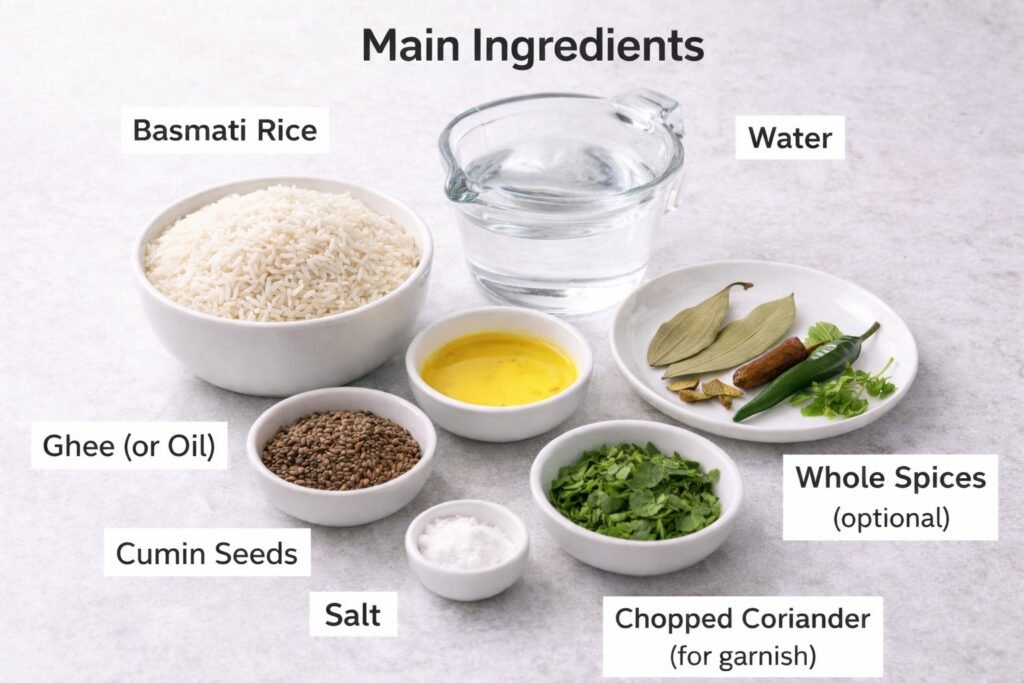
- 1 cup basmati rice (long-grain)
- 2 cups water
- 2 tbsp ghee (or oil, or half-half)
- 1½ tsp jeera (cumin seeds)
- 1 small bay leaf (tej patta)
- 2 green cardamom (optional, but recommended)
- 1 small piece cinnamon (optional)
- 1 green chilli, slit (optional)
- Salt to taste
- 1 tbsp finely chopped coriander leaves (for garnish)
Substitutes:
- Ghee can be replaced with oil or vegan butter
- Whole spices can be skipped for a simpler homestyle version
Step-by-Step Recipe Method (Detailed & Beginner-Friendly)
Step 1: Washing the Rice Properly
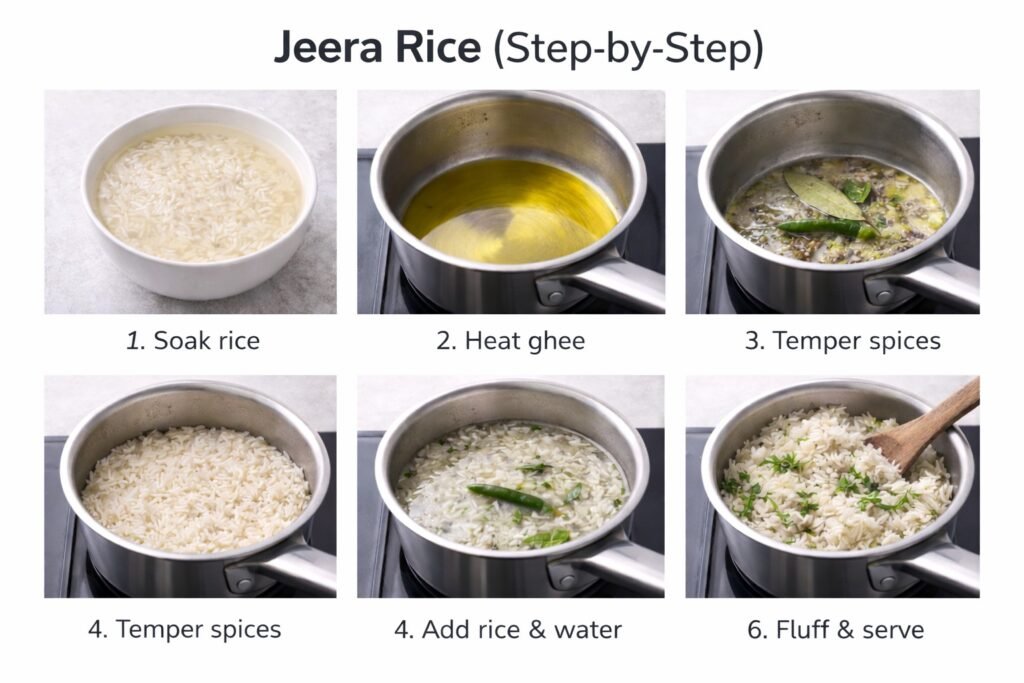
Start by measuring 1 cup basmati rice. Wash it gently under running water 3–4 times until the water becomes almost clear. This step is very important because excess starch can make rice sticky. Always handle basmati rice softly — don’t rub it aggressively.
Step 2: Soaking the Rice
Soak the washed rice in enough water for 20–30 minutes. This helps the grains expand and cook evenly. Soaking also ensures longer, fluffier grains once cooked. If you are in a hurry, even 15 minutes is acceptable, but longer soaking gives better texture.
Step 3: Draining the Rice
After soaking, drain the rice completely using a strainer. Make sure no excess water remains. This helps maintain the correct rice-to-water ratio during cooking.
Step 4: Heating Ghee for Tadka
Heat 2 tbsp ghee in a heavy-bottomed pan or kadhai on medium flame. Ghee is what gives restaurant-style jeera rice its signature aroma. If you prefer lighter rice, you can use half ghee and half oil.
Step 5: Adding Whole Spices
Once the ghee is warm, add jeera seeds. Let them crackle slowly — do not rush this step. Properly roasted jeera releases a warm, nutty aroma. Add bay leaf, cardamom, cinnamon, and green chilli if using. Sauté for a few seconds until fragrant.
Step 6: Adding the Rice
Lower the flame slightly and add the drained rice to the pan. Gently mix the rice with the ghee and spices. This step coats each grain with flavour and helps prevent sticking later. Stir carefully so the grains don’t break.
Step 7: Light Roasting (Optional but Recommended)
Sauté the rice for about 30–40 seconds. This gives the rice a subtle nutty flavour and keeps the grains separate after cooking. You’ll notice the rice becoming slightly translucent.
Step 8: Adding Water and Salt
Add 2 cups water and salt to taste. Stir once gently and increase the flame to medium-high. Taste the water — it should be slightly salty, like soup. This ensures perfectly seasoned rice.
Step 9: Cooking the Rice
Bring the water to a rolling boil. Once boiling, reduce the flame to low, cover the pan with a tight lid, and cook for 10–12 minutes. Do not open the lid frequently, as steam is essential for proper cooking.
Step 10: Resting the Rice
Once the water is absorbed, switch off the flame and let the rice rest covered for another 5 minutes. This helps the grains firm up and prevents breakage while fluffing.
Step 11: Fluffing and Garnishing
Open the lid and gently fluff the rice using a fork. Remove whole spices if preferred. Garnish with fresh coriander leaves. Your fluffy, aromatic jeera rice is ready to serve.
Pro Tips, Variations & Substitutes
- Restaurant Tip: Always use aged basmati rice for best results
- Extra Aroma: Add a few drops of ghee at the end before fluffing
- Healthy Version: Use less ghee and add a few cumin powder pinches
- Brown Rice Jeera Rice: Increase soaking time and cooking water
- No Whole Spices: Make a plain jeera rice with just cumin and ghee
Serving Suggestions
Jeera rice pairs beautifully with:
- Dal tadka or dal fry
- Rajma or chole
- Paneer butter masala/matar paneer/chicken curry
- Curd and pickle for a light meal
- As a lunchbox rice with dry sabzi
It works perfectly for lunch, dinner, or even small family gatherings.
Storage & Shelf Life
- Refrigerator: Store in an airtight container for up to 24 hours
- Reheating: Sprinkle little water and steam or microwave covered
- Freezing: Not recommended as texture may change
Freshly made jeera rice always tastes best.
Frequently Asked Questions (FAQs)
Either excess water, overcooking, or insufficient washing of rice.
Yes, you can use oil, but ghee gives authentic restaurant flavour.
Yes. Cook for 1 whistle on low flame after boiling.
In moderation, yes. It’s light, aromatic, and easy to digest.
Aged long-grain basmati rice gives the best texture and aroma.
Traditionally no, but light sautéed onions can be added if preferred.
Final Thoughts
Jeera rice may look simple, but when made correctly, it has the power to elevate the entire meal. It’s one of those dishes that quietly steals the show without being heavy or overpowering. This recipe has been tried, tested, and loved in many Indian kitchens, including mine.
If you try this jeera rice recipe, do share your experience in the comments. Your feedback, ratings, and little kitchen stories always make this space more special. Don’t forget to share it with someone who loves simple, comforting Indian food.
Happy cooking and happy eating!

Hello. impressive job. I did not anticipate this. This is a great story. Thanks!
Whats Taking place i’m new to this, I stumbled upon this I have found It positively helpful and it has aided me out loads. I hope to contribute & assist different users like its helped me. Great job.