
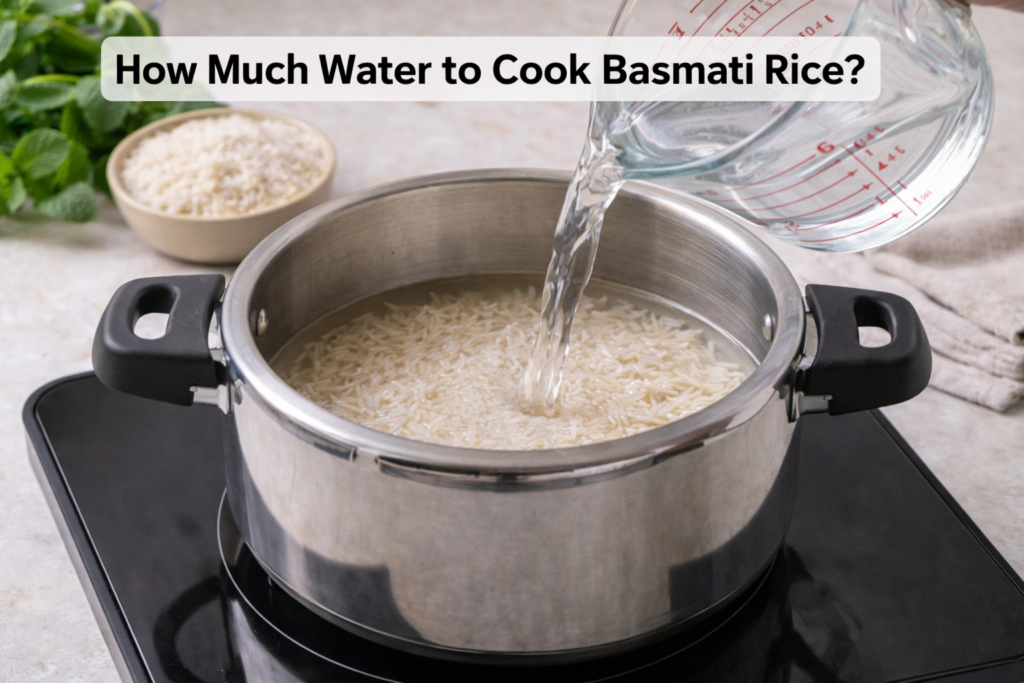
To cook basmati rice perfectly, use 1½ cups of water for every 1 cup of soaked basmati rice when cooking on a stove. If the rice is not soaked, use 2 cups of water. This ratio helps the grains cook fully while staying long, fluffy, and separate, not sticky or mushy.
Table of Contents
Why This Happens?
Many people struggle with basmati rice because it behaves differently from regular rice. It is longer, lighter, and releases starch in a different way.
Here’s what usually affects the water quantity:
- Soaking: Soaked rice absorbs water already, so it needs less while cooking
- Quality of rice: Old basmati rice needs slightly more water than new rice
- Cooking method: Pressure cooker, open pan, or rice cooker all behave differently
- Flame control: High flame evaporates water faster
In most Indian kitchens, rice turns sticky or broken simply because we use “andaaza se pani” instead of a fixed ratio.
Common Mistakes to Avoid
These are very common, especially for beginners:
- Adding too much water thinking rice will absorb it all
- Skipping soaking completely
- Stirring rice repeatedly while cooking
- Cooking on high flame till the end
- Draining rice too late or too early
- Using tight lid without checking water level
Any one of these can ruin even good-quality basmati rice.
How to Fix or Do It Right?
Follow these simple steps and you’ll get perfect basmati rice every time.
Step 1: Measure Properly
Take 1 cup basmati rice. Wash it gently 2–3 times till the water looks clearer.
Step 2: Soak the Rice
Soak the rice in enough water for 20–30 minutes. This helps the grains expand and cook evenly.
Drain the water completely before cooking.
Step 3: Use the Right Water Ratio
For soaked basmati rice:
- 1 cup rice → 1½ cups water
For unsoaked basmati rice:
- 1 cup rice → 2 cups water
Step 4: Cooking on Stove (Absorption Method)
- Add rice and water to a heavy-bottom pan
- Add salt if needed
- Bring to boil on medium flame
- Cover and cook on low flame for 8–10 minutes
Do not stir in between.
Step 5: Resting is Important
Once water is absorbed, turn off the flame and keep covered for 5 minutes.
Gently fluff with fork or spoon.
Pro Tips from Home Cooking Experience
- Always use long-grain aged basmati rice for best results
- Add 1 tsp oil or ghee to keep grains separate
- Never press rice while fluffing
- If rice looks slightly wet, keep lid open for 2 minutes
- For extra-long grains, soak for full 30 minutes
- Use wide pan, not a small vessel
These small habits make a big difference in everyday cooking.
Related Recipes to Try
Once your basmati rice is cooked perfectly, try these popular Indian dishes:
- Jeera Rice – simple and fragrant, perfect with dal
- Vegetable Pulao – light one-pot meal for lunch or tiffin
- Rajma Chawal – comfort food that depends on good rice
Perfect rice makes these recipes taste even better.
Frequently Asked Questions (FAQs)
Use 1¼ cups water for 1 cup soaked rice. Cook for 1 whistle on medium flame and release pressure naturally.
Yes, but use 2 cups water for 1 cup rice and expect slightly less long grains.
Too much water, overcooking, or excessive stirring usually causes stickiness.
Final Thoughts
Cooking basmati rice is simple once you understand the right water ratio. With proper soaking, measured water, and gentle cooking, you can get fluffy, non-sticky rice every single time.
Try these tips in your next meal, and you’ll notice the difference immediately. If this guide helped you, explore the related recipes and enjoy stress-free everyday cooking at home.


magnificent put up, very informative. I wonder why the opposite specialists of this sector do not realize this. You should continue your writing. I’m confident, you’ve a huge readers’ base already!