
Introduction
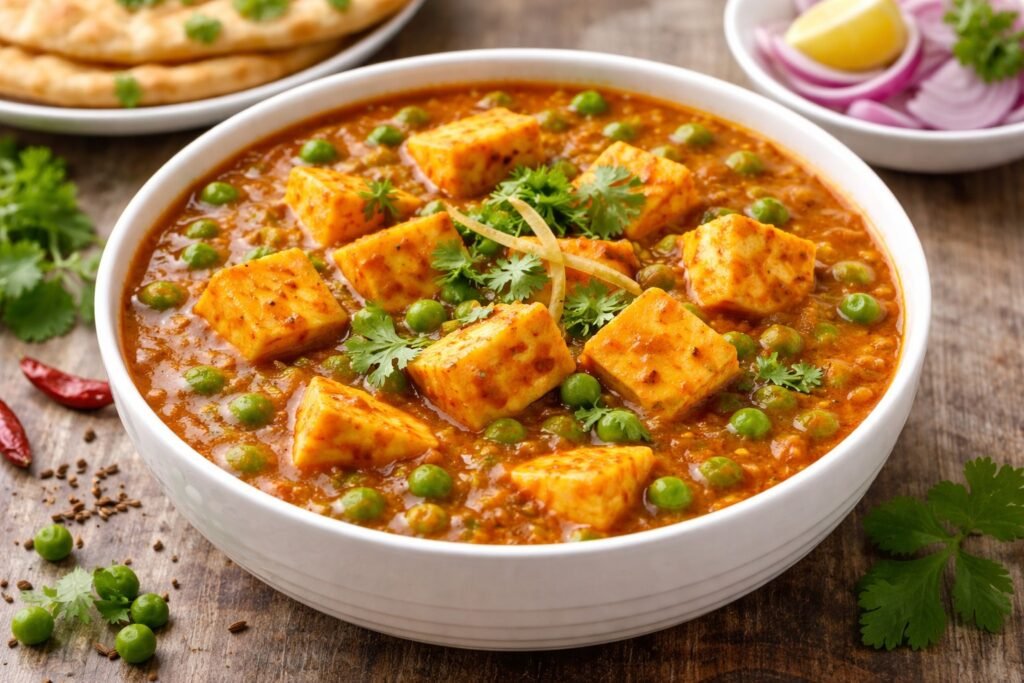
In most Indian homes, paneer dishes are reserved for days when we want something a little special. And among all paneer recipes, matar paneer holds a very emotional place. It’s the dish we order when guests come home, the sabzi that appears during festivals, and often the first paneer curry many of us learn to cook.
The combination of soft paneer cubes, sweet green peas, and a mildly spiced tomato-onion gravy is comforting and familiar. It works equally well for a relaxed Sunday lunch, a dinner party, or even a lunchbox with roti.
This matar paneer recipe at home is designed for Indian kitchens. No fancy ingredients, no heavy cream overload, and no restaurant shortcuts. Just a balanced, flavourful, restaurant-style matar paneer that tastes rich yet homely. Even if you are a beginner, you’ll be able to make this confidently.
Table of Contents
Calories & Nutritional Information (Per Serving)
- Calories: ~320 kcal
- Protein: ~14 g
- Carbohydrates: ~18 g
- Fat: ~22 g
- Fiber: ~4 g
(Approximate values depending on oil and cream used)
Health Benefits
When prepared at home with controlled oil and spices, matar paneer can be a nourishing part of an Indian diet.
Paneer provides good-quality protein and calcium, which helps keep you full and supports bone health. Green peas add fiber and plant protein while giving natural sweetness to the gravy. Tomatoes contribute antioxidants, and basic Indian spices like jeera and haldi support digestion.
Unlike restaurant gravies that are loaded with butter and cream, this homemade version lets you enjoy flavour without heaviness.
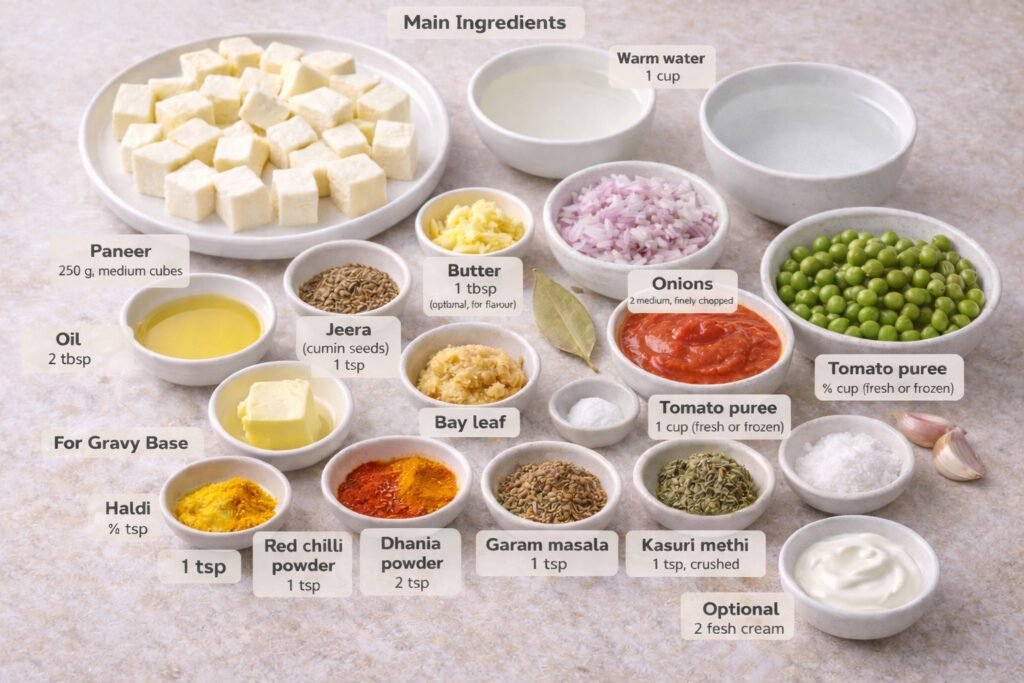
Ingredients Required
For Paneer Preparation
- Paneer – 250 grams, cut into medium cubes
- Warm water – 1 cup (for soaking paneer)
For Gravy Base
- Oil – 2 tbsp
- Butter – 1 tbsp (optional, for flavour)
- Jeera (cumin seeds) – 1 tsp
- Bay leaf – 1
- Onions – 2 medium, finely chopped
- Ginger-garlic paste – 1 tbsp
- Tomato puree – 1 cup (from fresh tomatoes)
- Green peas – ¾ cup (fresh or frozen)
Spices
- Haldi – ½ tsp
- Red chilli powder – 1 tsp
- Dhania powder – 2 tsp
- Garam masala – 1 tsp
- Kasuri methi – 1 tsp, crushed
- Salt – to taste
Optional
Fresh cream – 2 tbsp
Step-by-Step Recipe Method (Detailed & Beginner-Friendly)
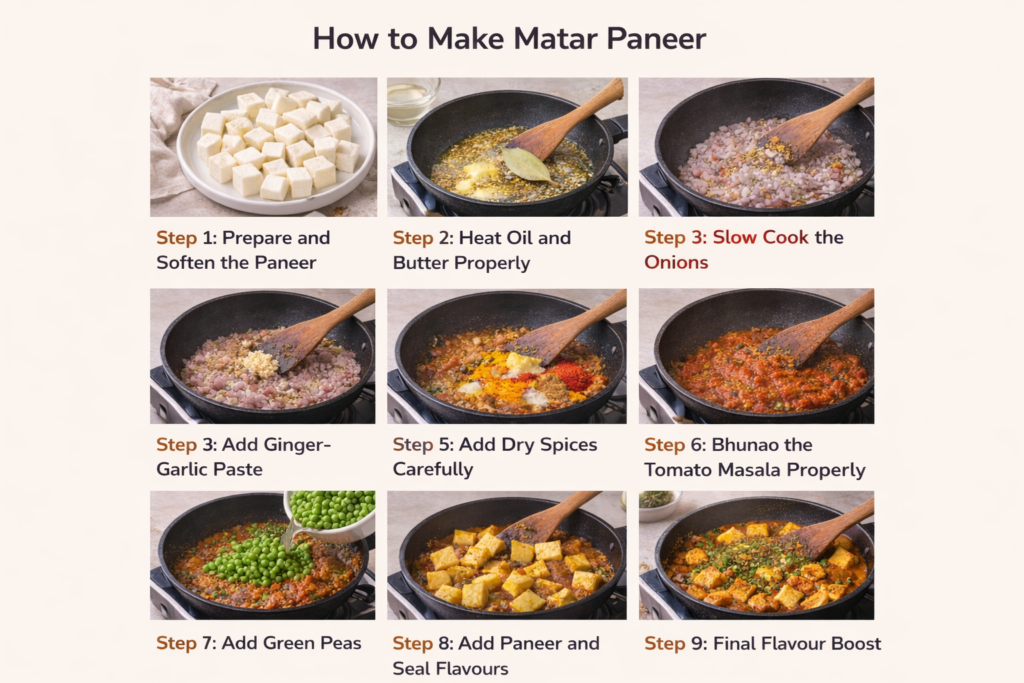
Step 1: Prepare and Soften the Paneer
Start by cutting paneer into medium-sized cubes. Avoid very small pieces as they may break while cooking. Place the cubes in a bowl and pour warm (not hot) water over them. Let the paneer soak for about 10 minutes.
This simple step makes a big difference. Soaked paneer stays soft, juicy, and absorbs the gravy better. If you skip this, paneer can turn chewy, especially after reheating.
Drain the water just before adding paneer to the curry.
Step 2: Heat Oil and Butter Properly
Place a heavy-bottom kadhai or deep pan on medium flame. Add oil and butter together. The oil prevents butter from burning, while butter adds richness to the gravy.
Once the fat heats up, add jeera and bay leaf. Let the jeera crackle gently. You should smell a warm, nutty aroma. Do not let the jeera turn dark brown, as that will make the gravy bitter.
Step 3: Slow Cook the Onions
Add finely chopped onions to the kadhai. Stir well and cook on medium flame. This step needs patience. Let the onions cook slowly until they turn light golden.
Stir occasionally and scrape the bottom of the pan to prevent sticking. Properly cooked onions add sweetness and depth to the curry. Rushing this step will affect the final taste.
This usually takes 8–10 minutes.
Step 4: Add Ginger-Garlic Paste
Once the onions are lightly golden, add ginger-garlic paste. Mix well and cook for 1–2 minutes until the raw smell disappears.
You may notice the oil starting to separate slightly from the masala — that’s a good sign. Keep the flame medium and stir continuously to avoid burning.
Step 5: Add Dry Spices Carefully
Lower the flame before adding spices. Add haldi, red chilli powder, and dhania powder. Mix quickly so the spices don’t burn.
Immediately add tomato puree and stir well. This prevents the spices from sticking to the pan and turning bitter.
Step 6: Bhunao the Tomato Masala Properly
Increase the flame slightly and cook the tomato-onion masala. Stir frequently, scraping the sides and bottom of the kadhai.
This bhunao process is the most important step for restaurant-style matar paneer. Cook until the masala thickens, turns glossy, and oil starts releasing from the sides. This may take 7–10 minutes, depending on the moisture in tomatoes.
Do not add water at this stage.
Step 7: Add Green Peas
Add green peas to the cooked masala. Mix well so they get coated evenly. Cook for 2–3 minutes.
If using frozen peas, you can add them directly. Fresh peas may take slightly longer but will cook fully in later steps.
Step 8: Add Paneer and Seal Flavours
Gently add soaked and drained paneer cubes to the gravy. Mix carefully using a spatula. Avoid stirring vigorously as paneer can break.
Let the paneer cook uncovered for 2–3 minutes so it absorbs the masala flavours.
Step 9: Adjust Gravy Consistency
Add about ½ cup warm water to adjust the gravy consistency. Mix gently. Add salt at this stage and stir carefully.
Cover the kadhai and cook on low flame for 5–7 minutes. This allows paneer and peas to cook evenly and the flavours to come together.
Step 10: Final Flavour Boost
Open the lid and check consistency. Add garam masala and crushed kasuri methi. Kasuri methi adds that unmistakable restaurant aroma.
Switch off the flame. If using cream, add it now and mix gently.
Cover and let the curry rest for 5 minutes before serving.
Pro Tips, Variations & Substitutes
- Use fresh paneer for best taste
- Always crush kasuri methi between palms
- For dhaba style, add extra butter on top
- For Jain version, skip onion and ginger-garlic
- For vegan option, replace paneer with tofu
Serving Suggestions
Matar paneer tastes best with:
- Phulka or roti
- Butter naan or kulcha
- Jeera rice or ghee rice
- Plain rice with salad and pickle
Storage & Shelf Life
- Refrigerator: Up to 2 days
- Freezing: Not recommended
- Reheating: Add a little water or milk and heat on low flame
Frequently Asked Questions (FAQs)
Overcooking or frying paneer makes it hard.
Yes, cream is optional.
It is mildly spiced and easily adjustable.
Yes, increase tomatoes and cashew paste.
Fresh peas taste best, frozen work well too.
Final Thoughts
Matar paneer is a timeless North Indian classic that never fails to impress. This detailed, home-style recipe gives you restaurant flavour without stress or excess oil. Once you try it, you’ll realise how easy it is to make paneer sabzi that tastes just right.
If you enjoyed this recipe, leave a comment below, rate it, and share it with your family and friends. Your feedback keeps this kitchen going.


Very interesting topic, appreciate it for putting up.