
Introduction
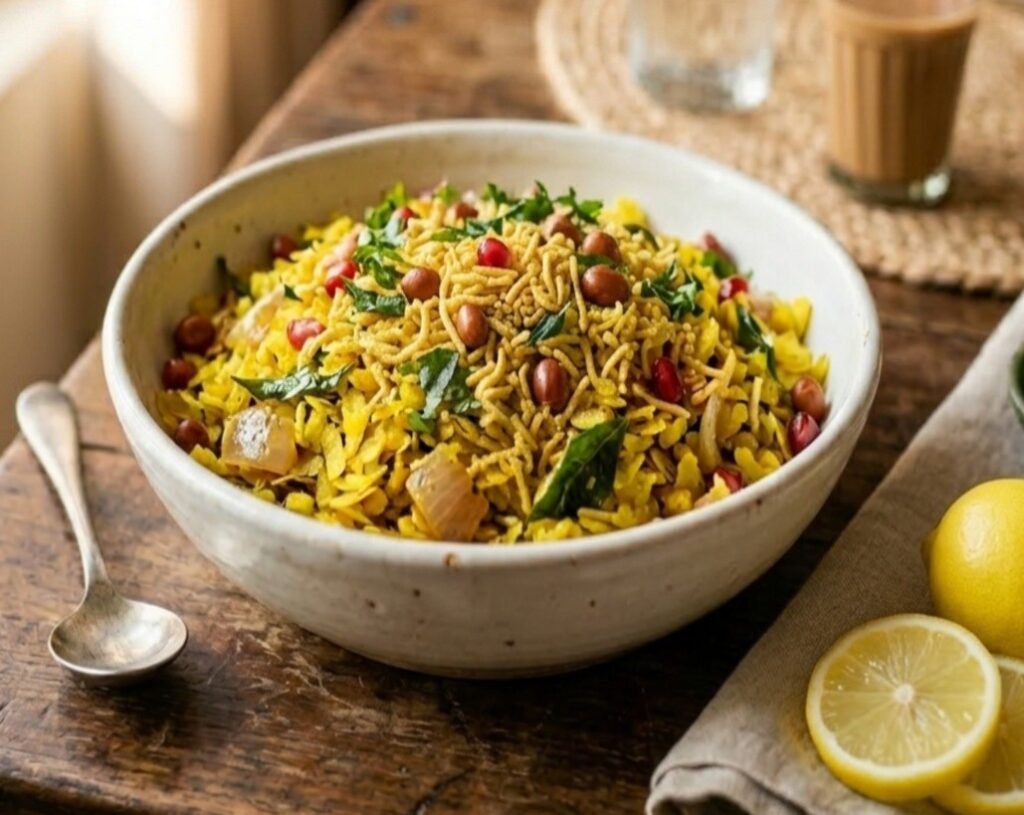
In most Indian homes, mornings begin with the sound of pressure cookers, the smell of chai, and the constant question — “Aaj breakfast mein kya banaye?” On such days, poha quietly saves the day. Light, quick, and comforting, poha is one of those recipes that feels like home.
Whether you are a college student rushing to class, a working professional with limited time, or a homemaker looking for something easy yet filling, poha recipe is always a reliable choice. It doesn’t need fancy ingredients, doesn’t demand too much effort, and still tastes absolutely satisfying.
Across India, poha is loved in many forms — kanda poha, lemon poha, vegetable poha, even peanut poha. This version is a simple, everyday poha made at home, explained step by step so even beginners can cook it confidently.
Table of Contents
Calories & Nutritional Information (Per Serving)
Approximate values (1 medium bowl):
- Calories: 250 kcal
- Protein: 5 g
- Carbohydrates: 45 g
- Fat: 6 g
- Fiber: 3 g
(Values may vary depending on oil and toppings used)
Health Benefits
Poha is not just tasty, it is also gentle on the stomach and suits Indian dietary habits well.
- Flattened rice is easy to digest and light on the gut
- Peanuts add healthy fats and plant protein
- Onions provide antioxidants
- Turmeric (haldi) has anti-inflammatory properties
- Low oil cooking makes it suitable for daily meals
Poha is a good option for people who prefer light breakfasts, senior citizens, and those recovering from illness. It can also be adapted easily for weight-conscious diets.
Ingredients Required
(Serves 2–3 people)
- Thick poha (flattened rice) – 2 cups
- Onion – 1 medium, finely chopped
- Potato – 1 small, finely chopped (optional)
- Green chilli – 1, finely chopped
- Peanuts – 2 tbsp
- Mustard seeds – ½ tsp
- Cumin seeds (jeera) – ½ tsp
- Turmeric powder (haldi) – ¼ tsp
- Sugar – ½ to 1 tsp (adjust to taste)
- Salt – to taste
- Lemon juice – 1 tbsp
- Oil – 2 tbsp
- Curry leaves – 8–10
- Fresh coriander – for garnish
Substitutes:
- Use roasted chana instead of peanuts
- Skip potato for a lighter version
- Use rock salt for fasting days
Step-by-Step Recipe Method (Detailed & Beginner-Friendly)
Step 1: Washing and Preparing Poha (Very Important)
Take poha in a large sieve or bowl. Rinse it gently under running water once or twice only. Do not soak. Let the water drain completely.
Sprinkle salt and sugar over the poha. Mix lightly using fingers. Set aside for 8–10 minutes. The poha should turn soft but not mushy.
Tip: If poha breaks easily, sprinkle 1–2 tbsp water and rest again.
Step 2: Preparing the Base Ingredients
Chop onion, green chilli, potato, and coriander in advance. This makes cooking smooth and quick.
If using peanuts, keep them ready separately.
Step 3: Making the Tadka (Flavour Builder)
Heat oil in a kadhai on medium flame.
Add peanuts first and fry till crisp. Remove and keep aside.
In the same oil, add mustard seeds. Let them crackle.
Add cumin seeds, curry leaves, and green chilli. Sauté for a few seconds till aromatic.
This tadka forms the base flavour of the poha.
Step 4: Cooking Onion and Potato
Add chopped onions. Sauté till soft and slightly translucent.
Add chopped potatoes and cook covered for 2–3 minutes until soft.
Sprinkle a little salt to help potatoes cook faster.
Step 5: Adding Masala
Add turmeric powder and mix well. Keep flame low to avoid burning haldi.
At this stage, your kitchen will start smelling like a proper Indian breakfast place.
Step 6: Mixing Poha
Add prepared poha to the kadhai. Mix very gently using a spatula.
Do not stir aggressively.
Cover and cook on low flame for 2–3 minutes. This allows flavours to blend.
Step 7: Final Touch
Add fried peanuts back.
Sprinkle lemon juice and chopped coriander.
Mix once, turn off the flame, and let poha rest for 2 minutes before serving.
Your soft, fluffy poha at home is ready.
Pro Tips, Variations & Substitutes
Restaurant-Style Taste:
- Use groundnut oil for authentic flavour
- Add a pinch of sugar even if you like savoury taste
Healthy Options:
- Skip potatoes
- Use minimal oil
- Add vegetables like carrot or beans
Regional Variations:
- Maharashtrian: Add grated coconut
- Indori poha: Add fennel seeds and sev
- South Indian: Add cashews and ginger
Serving Suggestions
Poha tastes best when served hot with:
- Cutting chai or filter coffee
- Coconut chutney
- Fresh fruits on the side
Tiffin idea: Pack poha with roasted peanuts separately to retain crunch.
Storage & Shelf Life
- Best consumed fresh
- Can be stored in fridge for up to 24 hours
- Reheat on pan with a few drops of water
- Avoid microwaving multiple times
Poha does not freeze well.
Frequently Asked Questions (FAQs)
Yes, when cooked with less oil and more vegetables, poha is a healthy daily option.
Thick poha works best as it doesn’t turn mushy.
Yes, skip onion and add hing for flavour.
Overwashing or soaking poha makes it soggy.
Yes, in controlled portions and with minimal oil.
Printable Recipe Card
Prep Time: 10 minutes
Cook Time: 15 minutes
Total Time: 25 minutes
Servings: 2–3
Difficulty Level: Easy
Final Thoughts
Poha is more than just a breakfast recipe — it’s a part of everyday Indian life. Simple, comforting, and endlessly adaptable, this easy poha recipe proves that good food doesn’t have to be complicated.
If you tried this recipe, do leave a comment below and share your version. Your feedback helps this kitchen grow. Don’t forget to rate and share this recipe with family and friends who love simple Indian food.
Happy cooking! 🍽️



Fantastic goods from you, man. I’ve understand your stuff previous to and you’re just too fantastic. I really like what you have acquired here, certainly like what you are stating and the way in which you say it. You make it entertaining and you still take care of to keep it wise. I can’t wait to read much more from you. This is actually a tremendous web site.