
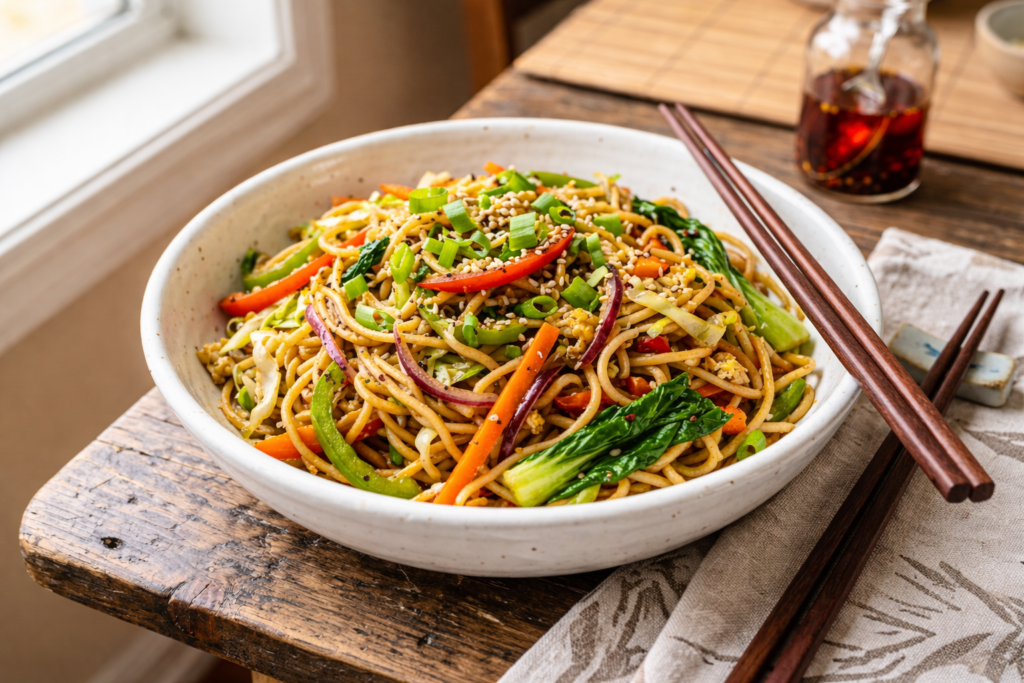
Introduction
In many Indian homes, especially on weekends or relaxed evenings, there is always a craving for something slightly different from regular roti-sabzi or dal-chawal. That’s when Indo-Chinese dishes come to the rescue. One dish that almost everyone loves — kids, students, and working professionals alike — is vegetable Hakka noodles.
I still remember the excitement of eating hot noodles from street stalls after school or during evening walks in busy markets. The sizzling sound of vegetables being tossed in a big kadhai and that amazing aroma of garlic and sauces made it irresistible.
The good news is that you can easily recreate that same flavour at home. This Vegetable Hakka Noodles Recipe is simple, quick, and perfect for beginners. With the right technique and a few kitchen tips, you can make noodles that taste very close to restaurant or street-style noodles, but healthier and cleaner.
Let’s get started and make a bowl of delicious homemade vegetable Hakka noodles.
Table of Contents
Calories & Nutritional Information (Per Serving)
- Calories: 340 kcal
- Protein: 9 g
- Carbohydrates: 48 g
- Fat: 12 g
- Fiber: 4 g
This makes vegetable Hakka noodles a filling and satisfying meal when paired with vegetables.
Health Benefits
Vegetables
This recipe includes carrots, cabbage, capsicum, and spring onions. These vegetables provide fiber and nutrients and help balance the carbohydrates from noodles.
Homemade Cooking
When made at home, you can control oil and sauces. This makes the dish lighter compared to many restaurant versions.
Balanced Meal Option
If you add more vegetables and reduce sauces slightly, vegetable Hakka noodles can become a wholesome quick meal for busy weekdays.
Energy Boost
Noodles provide quick energy, which is why this dish is popular among students and working professionals who need a fast but satisfying meal.
Ingredients Required
Here are the ingredients needed for making vegetable Hakka noodles at home.
For Boiling Noodles
- 200 grams Hakka noodles
- Water for boiling
- 1 tsp salt
- 1 tsp oil
For Stir Fry
- 2 tbsp oil
- 4 cloves garlic (finely chopped)
- 1 tsp ginger (finely chopped)
- ¼ cup carrot (julienned)
- ¼ cup cabbage (shredded)
- ¼ cup capsicum (thin slices)
- 3 tbsp spring onions (chopped)
Sauces and Seasoning
- 1 tbsp soy sauce
- 1 tsp green chilli sauce
- 1 tsp vinegar
- ½ tsp black pepper powder
- Salt as required
Optional Additions
- Beans (thinly sliced)
- Sweet corn
- Mushrooms
Substitutes
- No Hakka noodles: Use regular noodles or whole wheat noodles.
- Less spicy version: Skip chilli sauce.
- Healthier version: Use olive oil or reduce oil quantity.
Step-by-Step Recipe Method (Detailed & Beginner-Friendly)
Step 1: Boiling the Noodles
Start by boiling water in a large pot.
Add:
- Salt
- A little oil
Once the water starts boiling, add the noodles.
Cook the noodles according to the packet instructions, usually about 3–4 minutes.
Important tip: Do not overcook noodles, otherwise they will become sticky and break while cooking later.
Once done, drain the noodles and rinse them under cold water. This stops further cooking and keeps them separate.
Spread the noodles on a plate and drizzle a few drops of oil to prevent sticking.
Step 2: Preparing the Vegetables
While the noodles are cooling, prepare the vegetables.
Cut carrots, capsicum, and cabbage into thin strips. Thin slicing is important because Hakka noodles cook quickly and vegetables should cook fast too.
Tip: The thinner the vegetables, the more authentic the street-style noodles taste.
Keep all ingredients ready before cooking because stir frying happens quickly.
Step 3: Heating the Kadhai or Pan
Take a wide kadhai or wok and heat it on high flame.
Add oil and allow it to heat well.
Now add chopped garlic and ginger.
Sauté for a few seconds until aromatic. This step creates the base flavour of the noodles.
Cooking tip: Always cook noodles on high heat to get that street-style taste.
Step 4: Stir Frying the Vegetables
Now add carrots and beans first because they take slightly longer to cook.
Stir fry for about 1 minute.
Next add:
- Capsicum
- Cabbage
Cook for another 1–2 minutes on high flame.
The vegetables should remain slightly crunchy, not soft.
Add half of the spring onions and mix well.
Step 5: Adding the Noodles
Now add the boiled noodles into the kadhai.
Use tongs or two spatulas to gently toss the noodles with vegetables.
Important tip: Do not press the noodles too much, otherwise they may break.
Tossing helps mix everything evenly.
Step 6: Adding Sauces and Seasoning
Now add:
- Soy sauce
- Green chilli sauce
- Vinegar
- Black pepper
Mix everything well while tossing.
Taste and add salt only if required, because soy sauce already contains salt.
Cook for about 2–3 minutes on high flame.
This is the stage where noodles absorb flavour.
Step 7: Final Touch
Add the remaining spring onions on top.
Give one final toss.
Turn off the flame.
Your hot and delicious vegetable Hakka noodles are ready to serve.
At this stage, the aroma in the kitchen is absolutely amazing and very similar to what you smell at street food stalls.
Pro Tips, Variations & Substitutes
- Street Style Noodles Secret
Cook everything on high flame and keep tossing continuously. - Restaurant Style Taste
Add a few drops of sesame oil at the end for extra aroma. - Healthy Version
Use whole wheat noodles and increase vegetable quantity. - High Protein Version
You can add: Paneer cubes/Tofu/Scrambled egg - Indian Fusion Version
Some people like adding a small tadka of green chilli and garlic in extra oil for a stronger flavour. - Kids Friendly Version
Reduce chilli sauce and increase sweet corn.
Serving Suggestions
Vegetable Hakka noodles can be served in many ways depending on the occasion.
Best combinations:
- Chilli paneer
- Chilli chicken
- Manchurian gravy
- Chilli mushroom
- Sweet corn soup
Simple meal idea:
Serve noodles with a bowl of soup and a small salad.
Perfect for:
- Weekend dinner
- Quick lunch
- Evening cravings
- Small house parties
It’s also a great tiffin option for students and office lunch boxes.
As Starter or Side
- Serve with onion rings and lemon wedges
- Great for evening snack
- High-protein tiffin option
It pairs beautifully with simple food that lets the liver flavour shine.
Storage & Shelf Life
Refrigerator
Store leftover noodles in an airtight container. It stays fresh for 1–2 days.
Reheating Tip
Heat noodles in a pan with a little oil and toss on high flame.
Avoid reheating multiple times because noodles may become dry.
Freezer
Freezing is not recommended because noodles may lose texture.
Frequently Asked Questions (FAQs)
This usually happens when noodles are overcooked or not rinsed with cold water after boiling.
Thin Hakka noodles work best because they cook quickly and mix well with vegetables.
Restaurants cook noodles on very high heat and use a wok to give a smoky flavour.
Yes, you can use salt and a little vinegar instead.
Use whole wheat noodles, add more vegetables, and reduce oil.
Printable Recipe Card
Prep Time: 10 minutes
Cook Time: 15 minutes
Total Time: 25 minutes
Difficulty Level: Easy
Final Thoughts
Vegetable Hakka noodles is one of those dishes that always brings joy to the table. It’s quick, colourful, flavourful, and perfect for both beginners and experienced home cooks.
What I personally enjoy most about this recipe is how easily it can be customised. Some days I add more vegetables, sometimes paneer, and sometimes keep it simple just like street-style noodles.
If you try this recipe at home, do share your experience. Did you cook it on high flame like street vendors? Or did you add your own twist?
Your comments, ratings, and suggestions help our cooking community grow. And if you enjoyed this recipe, share it with friends and family who love simple homemade Indo-Chinese food.
Happy cooking! 🍜